What a Laundry Owner Should See on Their Dashboard
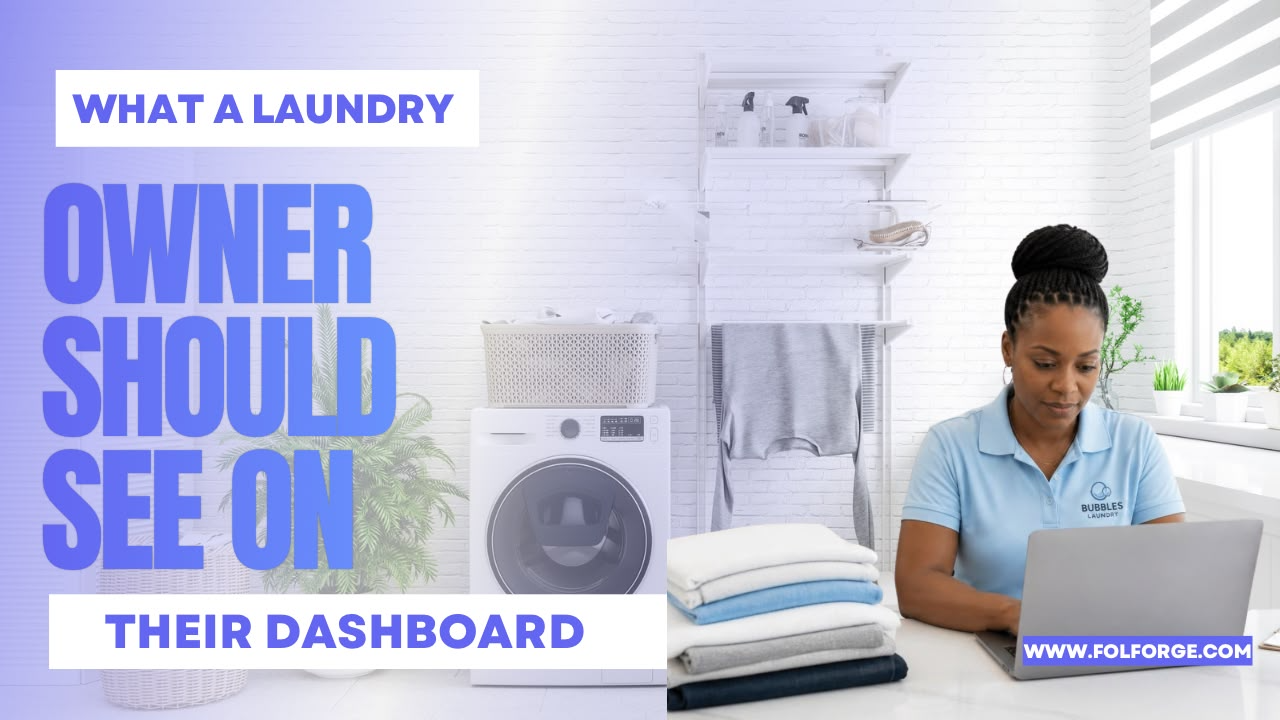
Imagine starting your day without opening five different notebooks, checking several WhatsApp conversations, calling your staff for updates, and trying to remember which orders are still pending. Instead, you open one screen and immediately see what's happening across your laundry business. You can see how many orders came in, which ones are ready, what payments have been made, which customers are waiting, and how the business performed yesterday. That is the value of a laundry business dashboard. It gives owners a clear view of the business without requiring them to stand behind the counter all day. For many laundry owners, the biggest challenge isn't a lack of information; it's having information scattered everywhere. A dashboard brings important details together so you can spend less time searching for answers and more time deciding what to do next. Whether you run one laundry shop or several locations, having a central view can make the business feel far more manageable.
One of the first things a dashboard can help you understand is your daily order activity. Instead of simply knowing that your shop was busy, you can see exactly how many orders were received, how many are being processed, how many are ready, and how many are still pending. This is where laundry management software becomes useful beyond basic record keeping. For example, imagine noticing that your business received 80 orders yesterday but only 55 were completed. That difference tells you something worth investigating. Maybe your team was overloaded, perhaps one stage of the process slowed down, or there were too many urgent requests. Without visibility, you might only notice that customers were complaining. With a dashboard, you can identify the numbers behind the problem and start looking for a solution.
Money is another area where owners need clear visibility. A business may look busy while revenue is not moving in the direction you expect. Your dashboard can help you see sales, outstanding payments, order values, and other financial information in one place. Instead of waiting until the end of the month to manually add up receipts, you can monitor performance as transactions happen. Good laundry business reports can help answer questions such as: How much did we make today? Which services generated the most sales? How much money is still outstanding? Are sales increasing compared with last month? These aren't just numbers to look at; they help you decide where to focus. Maybe pickup and delivery is becoming more popular. Maybe one service is attracting customers but not generating enough revenue. Maybe unpaid balances are becoming a recurring issue. A clear report can make those patterns much easier to spot.
Customer activity is another important part of what a laundry owner can see. Your customers leave behind valuable information every time they place an order. They show you how often they return, which services they use, how much they spend, and when they tend to visit. With laundry business analytics, you can begin to understand these patterns instead of treating every customer interaction as an isolated transaction. You might notice that some customers order every week while others haven't returned in months. You may discover that certain customers regularly use express services or pickup and delivery. This information can help you make smarter decisions about customer communication, loyalty offers, and service improvements. The aim isn't to turn your customers into numbers. It's to understand their behavior well enough to serve them better.
A dashboard can also give you visibility into the health of your daily operations. What is the average turnaround time for an order? How many orders are overdue? Which jobs are still waiting for processing? Where are the biggest delays happening? These are questions that are difficult to answer when you're relying on memory and paper records. A good laundry management software platform can make this information easier to access and understand. When you can see where orders are getting stuck, you can investigate the process behind the delay. Maybe your sorting stage needs attention. Perhaps ironing is overloaded during certain hours. Maybe delivery scheduling needs improvement. Instead of telling the team to simply "work faster," you have better information about what actually needs fixing.
Staff visibility is another benefit that can make a big difference. As a laundry grows, owners often become the person everyone calls whenever something is unclear. "Has this customer paid?" "Is this order ready?" "Who is handling this delivery?" That constant interruption takes time away from important work. A dashboard can help create a shared view of operations so employees and managers can access the information they need without depending on the owner for every answer. Laundry business reports can also help owners monitor activity across shifts or locations and understand whether processes are being followed consistently. This doesn't mean using software to watch every employee. It means creating enough visibility to know whether the business is operating as expected.
For laundry owners with more than one branch, the value of a centralized dashboard becomes even clearer. You may be sitting at one location while another branch is receiving orders, processing garments, collecting payments, and serving customers. Without a central system, staying informed can mean constant calls and messages. A laundry business dashboard can bring key information from different locations into one view. You can see how each branch is performing, identify differences in order volume, and spot issues that may need attention. This makes it easier to manage a growing business without physically being everywhere at once. The owner moves from constantly chasing updates to having information available when it's needed.
Perhaps the biggest advantage of a dashboard is what it changes about decision-making. Without data, owners often make decisions based on assumptions. "I think Fridays are our busiest days." "It feels like customers prefer this service." "I think we're spending too much on supplies." Sometimes those assumptions are correct, but sometimes they're not. Laundry business analytics gives you a way to test those assumptions against actual business information. That can help you make better decisions about staffing, pricing, marketing, services, working hours, and expansion. Good decisions don't always come from having more information; they come from having the right information at the right time.
This is where FoldForge fits into the modern laundry business. A laundry owner shouldn't have to spend hours collecting information from paper receipts, spreadsheets, phones, and separate systems just to understand how the business is performing. Laundry management software can organize that information and make it easier to access in a single environment. The goal isn't to overwhelm owners with charts and numbers. It's to give them a clearer picture of what is happening so they can act quickly when something needs attention and recognize opportunities when they appear.
At the end of the day, a business dashboard isn't just a screen full of numbers. It's a window into your business. It can show you what's happening with orders, customers, revenue, payments, staff activity, and daily operations without requiring you to ask ten different people for answers. For a busy laundry owner, that visibility can mean less guesswork, faster decisions, and more control. With the right laundry business dashboard, laundry business reports, and laundry management software, you don't just know that your laundry business is busy you understand why it's busy, where it's performing well, where it needs attention, and what you can do next. That's the difference between simply running a laundry business and actually managing it.